

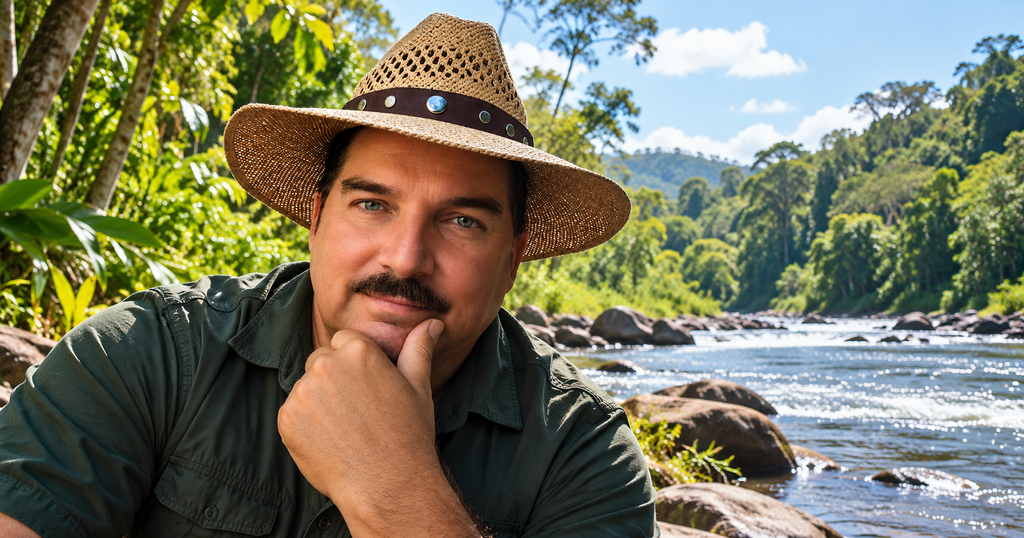
PASTOR JEDIDIAH WAYNE GAINES
MISSIONARY • PASTOR • AUTHOR • TEACHER
CALLED • CHOSEN • FAITHFUL
“O God, You have taught me from my youth;
And to this day I declare Your wondrous works.”
— Psalm 71:17
For more than four decades, Pastor Jedidiah Wayne Gaines has served in Christian missions and ministry with a continuing purpose: to point people to Jesus, strengthen believers, equip indigenous Christian leaders, and help carry the Gospel to the nations.
What began with a young man’s surrender to the call of God grew through missionary service in Latin America into a lifetime of evangelism, discipleship, pastoral ministry, humanitarian service, teaching, publishing, music, media, and partnership with Christian leaders around the world.
The methods have changed. The mission has not.
POINTING PEOPLE TO JESUS.
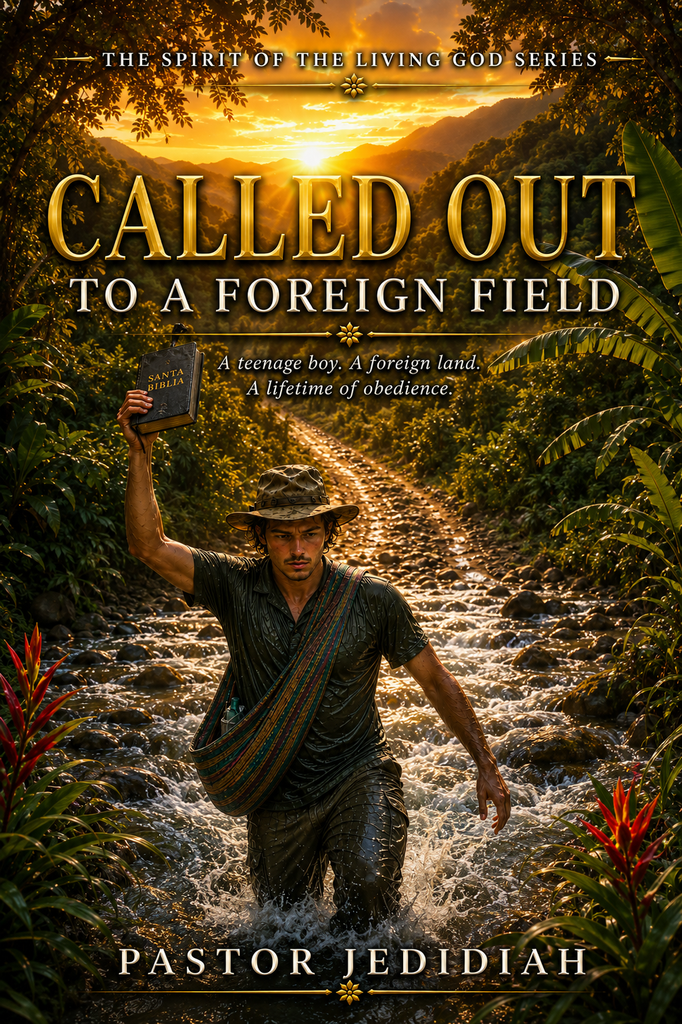
Read my missionary story in my book on Amazon: CALLED OUT TO A FOREIGN FIELD
FROM A SURRENDERED SEED TO A LIFETIME OF MINISTRY
A calling is rarely understood all at once.
It grows through obedience.
Through people.
Through places.
Through years of serving, learning, giving, receiving, failing, rising again, and continuing to say yes to Jesus.
The story of Pastor Jedidiah’s ministry reaches back to his youth and early missionary formation in Latin America. Over the decades, that calling has taken many forms—but the roots remain Jesus Christ, Scripture, prayer, surrender and obedience.
Today, that same calling continues through CrownLife International, Pointing to Jesus, Kingdom Tunes, books and publications, teaching and media, humanitarian ministry, and partnership with indigenous pastors and ministries.
[EXPLORE THE FULL MINISTRY HISTORY]
THE MINISTRY TODAY

🌎 CROWNLIFE INTERNATIONAL
Global Missions • Indigenous Leaders • Humanitarian Ministry
CrownLife International works through relationships with Christian pastors and ministry leaders, particularly those serving their own people and communities.
The objective is not simply to conduct ministry for others, but to strengthen faithful men and women already serving on the field so that ministry can continue multiplying through indigenous leadership.
[VISIT CROWNLIFE INTERNATIONAL]
✝️ POINTING TO JESUS
Gospel • Discipleship • Christian Teaching
At the center of everything is Jesus Christ.
Pointing to Jesus exists to proclaim the Gospel, encourage believers, teach Scripture and help people grow in a living relationship with Christ.
Different platforms. Different nations. Different generations.
The same Jesus.

🎵 KINGDOM TUNES
Music • Worship • Freely Shared Resources
Kingdom Tunes extends the ministry through Christian music, worship and creative resources designed to encourage believers and carry the message of Christ into everyday life.
Its governing spirit is simple:
Freely we have received. Freely we give.
📖 BOOKS & PUBLICATIONS
Teaching That Can Outlive the Teacher
Books allow lessons learned through decades of Christian life and ministry to travel beyond a pulpit, a meeting or a generation.
EXPLORE: THE SPIRIT OF THE LIVING GOD SERIES
Pastor Jedidiah’s writing and publishing ministry preserves biblical teaching, testimony and practical discipleship resources so that what has been learned can be passed forward.

🎙️ TEACHING & MEDIA
Scripture • Discipleship • Digital Ministry
From preaching and teaching to video, audio and emerging digital platforms, media provides another means of carrying biblical truth beyond geographical boundaries. Over 1,000 teaching videos in English and Spanish including the majority of the New Testament taught line by line, chapter by chapter and book by book.
The technology may change.
The message remains Jesus Christ.
🤝 INDIGENOUS PASTORS & MINISTRIES
Equipping Leaders Who Are Already There
One of the enduring lessons of missionary life is that some of the greatest Kingdom multiplication happens through men and women who already know the language, culture, people and needs of their own communities.
The goal is therefore larger than sending missionaries.
It is also about strengthening pastors, encouraging churches, developing leaders and helping indigenous ministry become increasingly fruitful and sustainable.
[DISCOVER OUR GLOBAL PARTNERSHIPS]
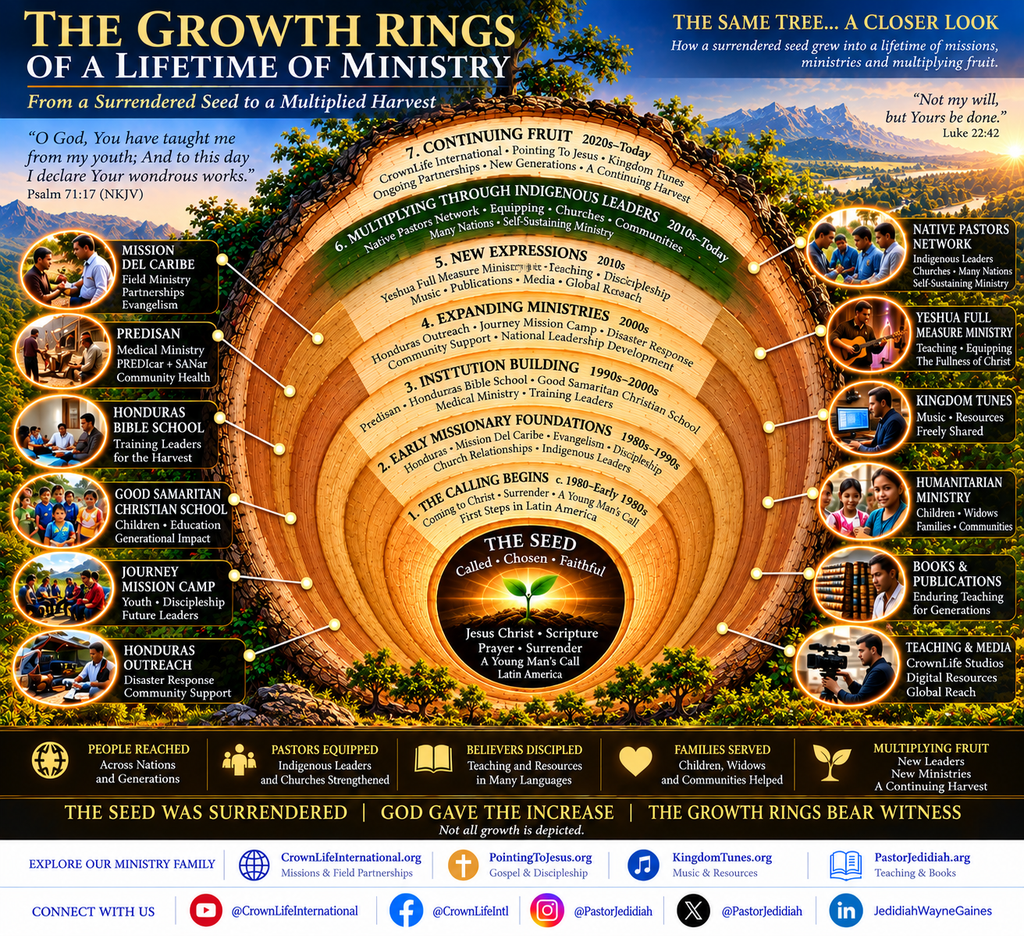
OUR MINISTRY TREE
THE ROOTS, GROWTH & FRUIT OF A LIFETIME OF MINISTRY
From a Mustard Seed to a Tree
What began as surrender became a lifetime of ministry expressed through missions, churches, schools, medical ministry, humanitarian work, pastoral relationships, teaching, books, music and digital resources.
The branches are different.
The root is Jesus Christ.
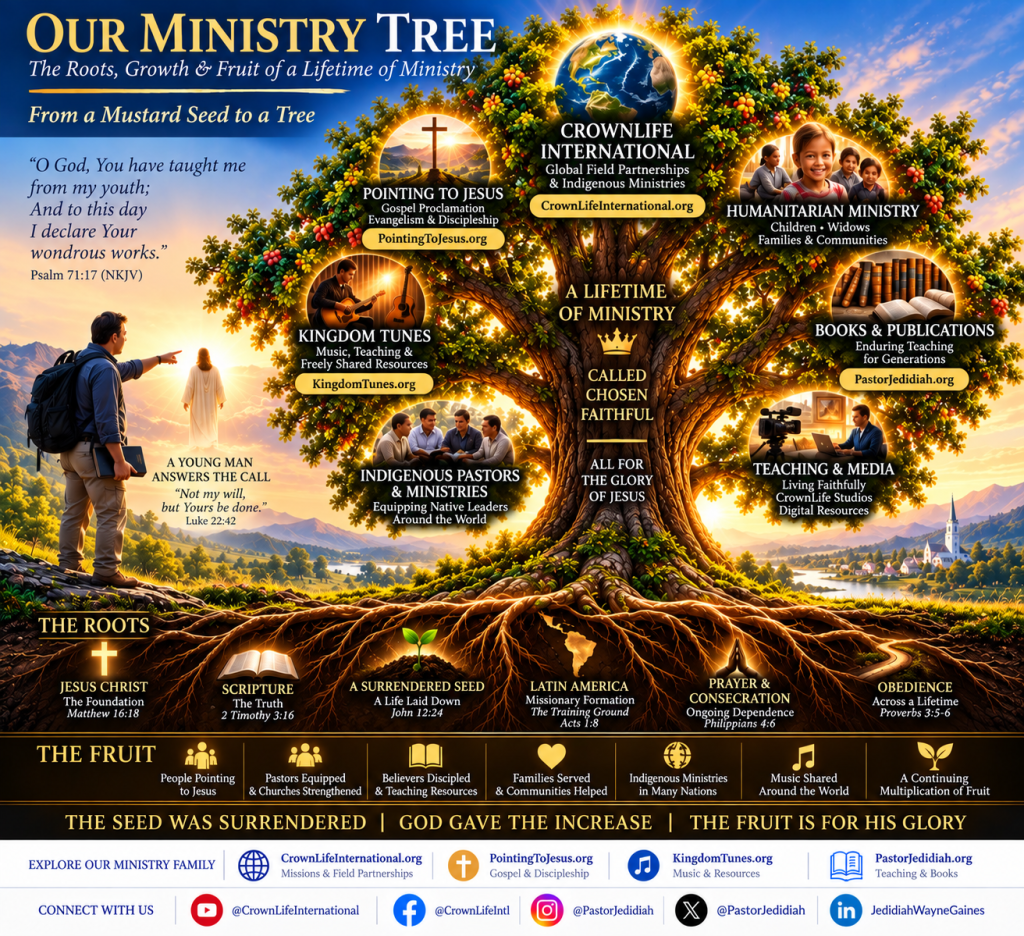
THE SEED WAS SURRENDERED
GOD GAVE THE INCREASE
THE FRUIT IS FOR HIS GLORY
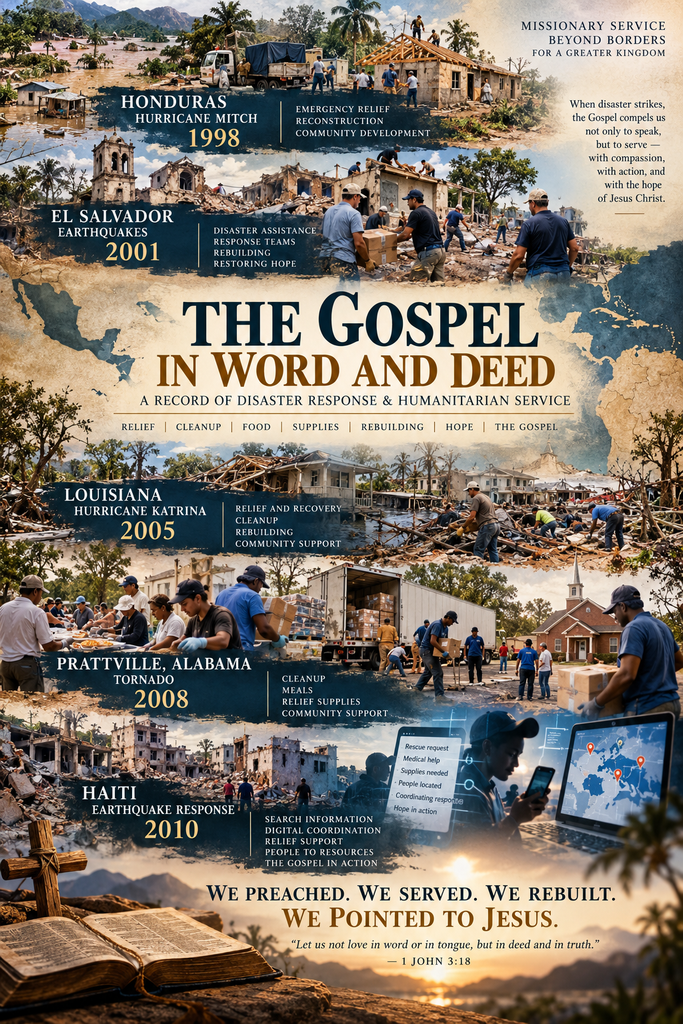
The Gospel in Word and Deed
Disaster Response & Humanitarian Service
For more than four decades, the missionary calling of Pastor Jedidiah Wayne Gaines has centered on proclaiming Jesus Christ, making disciples, strengthening indigenous pastors and churches, and equipping believers for ministry.
But preaching the Gospel has never meant words alone.
Over the years, relationships established through missionary work repeatedly became channels through which practical assistance could move when disaster struck—medical care, food, relief supplies, volunteers, reconstruction assistance, community development and, eventually, critical information delivered through emerging digital networks.
Sometimes the missionary network was already established before disaster came.
Sometimes we traveled directly into the disaster zone.
And sometimes the disaster struck us while we were already there serving.
“Let us not love in word or in tongue, but in deed and in truth.” — 1 John 3:18
Hurricane Mitch — Honduras, 1998
A Missionary Network Becomes a Relief Network
When Hurricane Mitch devastated Honduras in 1998, Pastor Jedidiah was not physically in Honduras when the storm struck.
But years of missionary service had already established something extremely important: relationships.
Mission Del Caribe had longstanding connections with Honduran ministers, churches, missionaries, communities and ministry institutions. Those relationships meant that disaster response did not have to begin by sending strangers into Honduras and attempting to build a network after catastrophe had already occurred.
The network was already there.
Those existing relationships helped Mission Del Caribe mobilize an immediate response on the ground while additional assistance was organized internationally.
The response grew to include emergency relief, distribution of humanitarian assistance, reconstruction, mission teams, logistical support and longer-term community development.
One enduring expression of that response was Colonia Misión del Caribe, a community developed following Hurricane Mitch. Mission Del Caribe purchased land and brought mission groups into Honduras to help construct homes for families affected by the disaster.
Years later, the community remained identifiable by the name Misión del Caribe.
Hurricane Mitch demonstrated an important principle that would continue through later disasters:
Relationships established for ministry before a disaster can become infrastructure for mercy when disaster comes.
El Salvador Earthquakes — 2001
Responding to One Earthquake When Another Struck
The El Salvador response was dramatically different.
Following the first major earthquake in January 2001, Pastor Jedidiah responded from the United States to Honduras.
Honduras provided a familiar missionary base from which existing ministry relationships could be mobilized. There, a Mission Del Caribe Disaster Assistance Response Team — MDC-DART was organized.
The team then traveled overland from Honduras into El Salvador with a medical and humanitarian relief brigade.
The mission involved both direct service and coordination.
The team provided relief while working with Churches of Christ and ministry relationships to help organize a broader response involving churches throughout the country.
Then the situation changed.
While the team was already in El Salvador responding to the first earthquake, another major earthquake struck the following morning.
The responders suddenly experienced the continuing disaster alongside the very people they had traveled there to serve.
The experience became an important part of the developing MDC-DART approach to disaster response: combining existing missionary relationships, indigenous churches, medical assistance, humanitarian relief and organized response capacity.
Sometimes we went to the disaster.
In El Salvador, another disaster found us while we were already serving.
Hurricane Katrina — Louisiana, 2005
Serving While Being Disaster Victims Ourselves
Hurricane Katrina brought disaster response much closer to home.
At the time Katrina struck, Wayne and Rosemary Gaines were living in Louisiana.
They were not watching the catastrophe from another state.
Their own property flooded.
Trees fell onto their home.
The Gaines family evacuated to the home of longtime ministry colleague Ronnie E. Carter in Millbrook, Alabama. Carter was then serving as President of Mission Del Caribe, while Wayne Gaines served as Vice President.
Mission Del Caribe subsequently participated in Katrina relief and rebuilding efforts.
But Katrina represented something different in the missionary record.
The missionary family itself had been affected by the disaster.
They experienced evacuation, property damage and disruption while remaining connected to efforts serving others who were suffering around them.
The distinction matters.
Humanitarian service was no longer simply something being carried into somebody else’s disaster zone. We were living inside one ourselves.
Prattville–Millbrook Tornado — Alabama, 2008
When Disaster Struck Our Community Again
After Katrina, Wayne and Rosemary Gaines eventually relocated to the Prattville/Millbrook area of Alabama and became members of Hunter Hills Church of Christ.
In February 2008, a powerful tornado struck the Prattville–Millbrook area.
Once again, disaster had reached the community where the Gaines family lived and worshiped.
Their role was not one of directing the overall disaster operation. They served alongside their congregation, other Christians, relief organizations and members of the surrounding community.
Their participation included cleanup, meals and relief-supply logistics, including helping coordinate a freight shipment of disaster-relief distribution boxes and supplies through the Churches of Christ disaster-relief network.
There was debris to remove.
There were people who needed food.
There were supplies that needed to reach families.
There were neighbors who needed neighbors.
So we served.
Haiti Earthquake — 2010
From Boots on the Ground to Digital Disaster Response
The catastrophic Haiti earthquake of January 2010 introduced another dimension of disaster response.
By this point, Pastor Jedidiah’s experience included Hurricane Mitch, the El Salvador earthquakes, Hurricane Katrina and the Prattville tornado.
But Haiti presented a new possibility.
Technology could become part of the relief infrastructure.
During the developing online response, Pastor Jedidiah participated under his Twitter identity @M300_Ministrie and became involved with the broader network of digital volunteers working to connect information from Haiti with people and organizations capable of responding.
His work included collaboration on KnowYourHaitiRelief.info.
In a 2013 professional recommendation, Stephenie Rodriguez recalled collaborating with Wayne after the Haiti earthquake and specifically described his understanding of the mobile social web and the importance of working as a digital community across borders and organizations during emergency and NGO projects.
The Haiti response also included the developing ecosystem surrounding Ushahidi and Mission 4636, through which incoming information could be translated, categorized, geolocated and routed toward organizations and responders.
#rescuemehaiti
One particularly significant part of Pastor Jedidiah’s firsthand account concerns the Twitter hashtag #rescuemehaiti.
While assisting with the online Haiti response, he recognized a fundamental problem.
Information about people needing rescue was scattered.
Individual reports could disappear rapidly into the enormous volume of social-media communication surrounding the earthquake.
The idea was simple:
Give rescue requests a common identifier.
Pastor Jedidiah recalls originating and beginning to promote #rescuemehaiti so that otherwise scattered reports concerning people needing rescue could be brought into a common, searchable Twitter stream.
Other participants began using the hashtag, and #rescuemehaiti subsequently became part of the documented digital-volunteer response to the Haiti earthquake.
Academic research later examined #rescuemehaiti as an example of volunteers creating structure within crisis information.
Surviving contemporary records independently establish the hashtag’s use and Pastor Jedidiah’s participation in the wider Haiti digital-response network. The specific attribution of the hashtag’s original creation to Pastor Jedidiah is preserved in the historical record as his firsthand testimony while research continues for surviving contemporary material explicitly identifying the original proposer by name.
That distinction is intentionally preserved for historical accuracy.
Three Forms of Presence
Looking across these disasters reveals a pattern.
Presence Before Disaster
In Honduras, years of missionary relationships meant trusted ministers, churches and communities were already connected when Hurricane Mitch struck.
The missionary network became a relief network.
Presence Within Disaster
In El Salvador, the DART team experienced another major earthquake while already serving victims of the previous one.
During Katrina, Wayne and Rosemary experienced flooding and damage to their own Louisiana home.
In Prattville, the tornado struck the community where they lived and worshiped.
Presence Across Distance
During the Haiti earthquake, emerging communications technology demonstrated that service could also cross borders digitally.
Information itself could become part of humanitarian infrastructure.
A mobile phone, Twitter message, searchable hashtag or mapped report could potentially help connect a human being in desperate need with someone capable of responding.
The Gospel Was Never Words Alone
Disaster assistance was never the central identity of the ministry.
Jesus was.
The calling remained to preach Christ, make disciples, strengthen churches, equip indigenous ministers and point people to Jesus.
But precisely because we preached that Gospel, suffering could not simply be observed.
So missionaries preached.
And they carried boxes.
Medical teams treated people.
Volunteers cleared debris.
Churches prepared meals.
Relief supplies crossed borders.
Homes were rebuilt.
Communities were established.
Pastors and congregations became response networks.
And eventually computers and mobile phones became additional tools for connecting human need with people capable of helping.
For the generations that follow, we want that part of the missionary record preserved.
We certainly preached.
But we also served.
We Preached. We Served. We Rebuilt. We Pointed to Jesus.
No ministry story is ever the work of one person alone.
The work recorded here involved missionaries, indigenous pastors, physicians, nurses, churches, congregations, mission teams, volunteers, donors, relief organizations, families and countless individuals whose names may never appear in a historical record.
Some prayed.
Some gave.
Some traveled.
Some treated patients.
Some cooked meals.
Some drove trucks.
Some cleared debris.
Some built houses.
Some opened their churches.
Some opened their homes.
Some used emerging technology to connect people who needed help with people capable of providing it.
Together, they served.
And whatever good came from those efforts belongs ultimately to the glory of Jesus Christ.
A Documentary Record for Future Generations
This page presents the narrative history in an accessible form. A companion documentary edition has also been prepared to preserve the chronology, documentary sources, firsthand testimony and provenance behind the account.
Download the complete historical record:
The Gospel in Word and Deed
Disaster Response, Humanitarian Service & the Missionary Record of Pastor Jedidiah Wayne Gaines
1998–2010 | Honduras • El Salvador • Louisiana • Alabama • Haiti
A LIFE STILL BEING POURED OUT
The purpose of looking backward is not nostalgia.
It is gratitude—and preparation for what comes next.
The same Scripture that has accompanied this journey now expresses its continuing purpose:
“O God, You have taught me from my youth;
And to this day I declare Your wondrous works.”
— Psalm 71:17
The calling continues through declaring Christ, discipling believers, strengthening pastors, sharing what has been learned, and helping prepare another generation to serve faithfully.
There is still seed to sow.
There are still people to encourage.
There are still pastors to strengthen.
There are still nations to reach.
And there is still one name above every ministry name: